
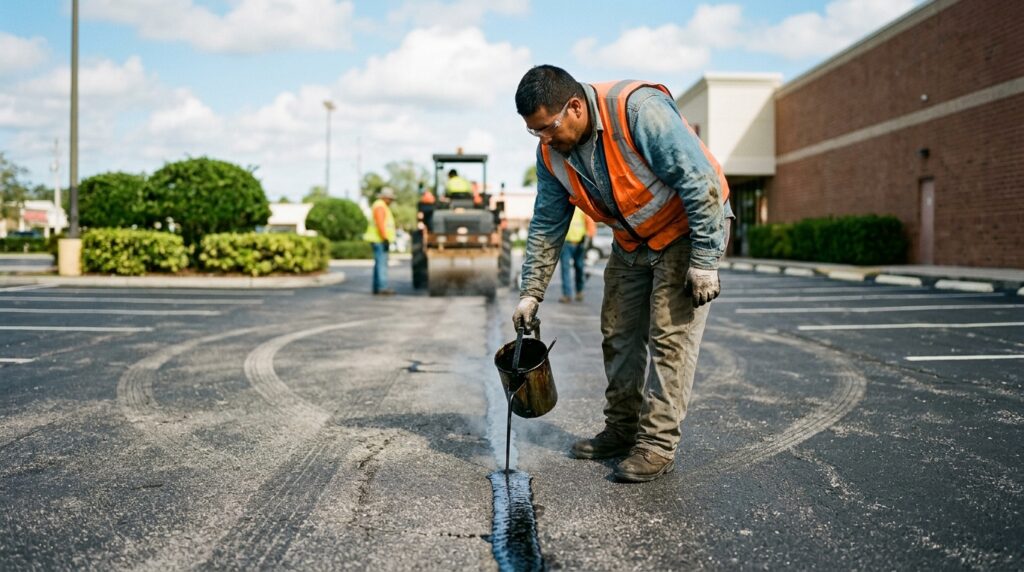
Inspect Your Asphalt Regularly
One of the simplest asphalt maintenance practices is performing regular visual inspections. Property owners should look at their pavement throughout the year and pay attention to changes in its appearance and condition.
Look for:
- Small cracks
- Potholes
- Alligator cracking
- Raveling or loose aggregate
- Depressions and uneven areas
- Standing water
- Faded pavement markings
- Damaged edges
- Vegetation growing through cracks
Small cracks may appear harmless, but water can enter pavement through untreated cracks and contribute to further deterioration. FHWA notes that crack treatments can reduce water and material intrusion into pavement, making crack sealing an important preventive maintenance activity.
Routine inspections allow you to address problems while they are still manageable. Waiting until a parking lot or driveway develops extensive cracking or potholes can result in more disruptive and expensive rehabilitation.
Seal Cracks Before They Become Larger
Crack sealing is one of the most important components of asphalt maintenance. Asphalt naturally expands and contracts with changing temperatures, while traffic and moisture can contribute to pavement movement and deterioration.
When cracks develop, water can penetrate into the pavement structure. In climates with freezing temperatures, repeated freeze-thaw cycles can make the situation worse. Sealing suitable cracks helps limit water infiltration and prevents debris from entering the pavement.
Not every crack should be treated in exactly the same way. The appropriate repair depends on the type, size, movement, and overall condition of the pavement. FHWA guidance distinguishes between crack sealing and crack filling and emphasizes selecting treatments according to pavement conditions.
Property owners should have significant or recurring cracks evaluated rather than simply applying filler without determining the underlying cause.
Address Potholes Promptly
Potholes are more than an appearance problem. They can create hazards for pedestrians and vehicles and may indicate that water has entered or weakened the pavement structure.
When a pothole appears, prompt repair is generally preferable to allowing traffic and moisture to make it larger. A small damaged area can become increasingly difficult to repair if the surrounding pavement continues to deteriorate.
Property owners should also look beyond the pothole itself. If water drainage, base failure, or widespread pavement deterioration contributed to the problem, simply filling the hole may not provide a lasting solution.
A professional assessment can determine whether the pavement needs localized patching or a more extensive repair.
Keep Drainage Systems Clear
Water is one of the major threats to asphalt pavement. Effective drainage helps prevent water from remaining on the pavement or accumulating along its edges.
Property owners should regularly inspect:
- Catch basins
- Drainage grates
- Gutters
- Swales
- Culverts
- Pavement slopes
- Areas around parking lot entrances
Leaves, dirt, gravel, and other debris can block drainage systems and create standing water. Over time, moisture can contribute to cracking, potholes, weakening, and other forms of deterioration.
Good drainage should therefore be considered an essential part of asphalt maintenance, not an unrelated property management task. FHWA materials identify restoration of drainage systems among preventive maintenance activities because controlling water is an important part of protecting pavement.
Keep the Pavement Clean
Regular cleaning may seem like a cosmetic task, but it can also help property owners identify developing problems.
Dirt and debris can collect in cracks and drainage areas. Oil and other vehicle-related fluids can also contaminate asphalt surfaces. Keeping the pavement reasonably clean makes it easier to identify cracks, surface deterioration, drainage problems, and other conditions that require attention.
Parking lots should receive routine sweeping, particularly in areas where leaves, sand, gravel, or other debris accumulate.
Clean pavement also creates a better foundation for professional maintenance treatments when those treatments are appropriate.
Consider Sealcoating When Appropriate
Sealcoating can help protect an asphalt surface from environmental exposure and improve its appearance. It is commonly used as part of pavement preservation programs when the underlying asphalt remains structurally sound.
However, sealcoating should not be viewed as a solution for every pavement problem. Severe cracking, potholes, rutting, drainage failures, or structural deterioration may require repairs before any surface treatment is considered.
FHWA identifies several preventive surface treatments, including chip seals, slurry seals, and microsurfacing, while emphasizing the importance of selecting the appropriate treatment for the pavement condition.
A qualified paving professional can inspect the pavement and determine whether sealcoating or another preservation treatment makes sense.
Manage Heavy Traffic and Vehicle Loads
Asphalt surfaces are designed to support expected traffic, but repeated heavy loads can accelerate deterioration. Property owners managing commercial facilities should pay attention to areas exposed to frequent truck traffic, delivery vehicles, buses, or heavy equipment.
Turning movements can be particularly demanding on parking lot surfaces. Heavy vehicles repeatedly turning in the same locations can contribute to rutting and surface wear.
Where practical, property owners can manage traffic patterns and designate appropriate loading or delivery areas. Regular inspections of high-traffic zones can also help identify deterioration before it spreads.
Maintain Pavement Edges
The edges of asphalt pavement can be especially vulnerable to damage when they are unsupported or exposed to water.
Property owners should check areas along curbs, shoulders, landscaped sections, driveways, and parking lot boundaries. Vegetation should not be allowed to grow through pavement cracks or push against pavement edges.
Keeping surrounding areas properly maintained can help reduce moisture accumulation and make it easier to spot edge deterioration.
If an edge begins breaking apart, professional repair may be necessary before the damage extends farther into the pavement.
Respond to Seasonal Changes
Seasonal maintenance is particularly important for properties exposed to changing temperatures and precipitation.
Before colder weather arrives, inspect cracks, drainage systems, pavement edges, and existing repairs. Keeping drainage pathways clear can help reduce water-related problems during periods of heavy precipitation.
After winter, inspect the pavement again for new cracks, potholes, surface deterioration, and areas affected by freeze-thaw cycles.
Creating a seasonal inspection routine makes asphalt maintenance more predictable and gives property owners opportunities to address small problems before they become major projects.
Do Not Ignore Faded Pavement Markings
Parking lot markings contribute to organization, accessibility, traffic flow, and overall property appearance. Over time, traffic and weather can cause markings to fade.
Property owners should periodically inspect parking spaces, directional arrows, fire lanes, loading areas, and other markings. Repainting faded lines can improve visibility and make a property look better maintained.
Marking maintenance should be coordinated with other pavement work when possible so that the property can be maintained efficiently.
Know When Professional Repairs Are Necessary
DIY maintenance may be appropriate for minor property care, but significant pavement problems require professional evaluation.
Consider contacting a paving professional when you notice:
- Widespread cracking
- Deep potholes
- Extensive alligator cracking
- Significant rutting
- Repeated pavement failures
- Drainage problems
- Major settlement
- Large deteriorated areas
- Rapidly worsening surface conditions
A professional can determine whether the pavement needs crack treatment, patching, resurfacing, an overlay, or reconstruction.
Preventive maintenance works best when the pavement is still in relatively good condition. FHWA explains that timely preservation treatments can slow deterioration and postpone more expensive rehabilitation or reconstruction.
Work With an Experienced Asphalt Professional
Property owners do not have to manage pavement preservation alone. An experienced paving contractor can evaluate pavement conditions, identify potential causes of deterioration, and recommend maintenance based on the property’s needs.
If you are searching for a naples asphalt company, look for a provider with experience in pavement inspection, repairs, resurfacing, drainage considerations, and preventive maintenance. Ask about the contractor’s experience with properties similar to yours and whether they can provide a clear explanation of recommended treatments.
The right contractor should focus on the condition of the existing pavement rather than automatically recommending the most extensive repair. Good maintenance planning considers pavement age, traffic, drainage, cracking, surface condition, and expected future use.
Create a Long-Term Maintenance Schedule
One of the best ways to protect asphalt is to make maintenance part of your regular property management routine.
Instead of waiting for visible damage to become severe, establish a schedule for inspections and maintenance. Document cracks, potholes, drainage concerns, and repaired areas so you can monitor changes over time.
A basic maintenance schedule might include:
Monthly: Check for new potholes, cracks, drainage issues, and debris.
Seasonally: Inspect the pavement before and after major weather changes.
Annually: Conduct a more detailed assessment of pavement condition and determine whether professional maintenance is needed.
As needed: Repair cracks, potholes, drainage issues, and other developing problems promptly.
This proactive approach can help property owners manage expenses more effectively while maintaining a safer and more attractive property.
Protect Your Investment With Consistent Asphalt Maintenance
Asphalt is a valuable investment, but its performance depends on how well it is maintained. Small cracks, blocked drainage, potholes, edge deterioration, and surface wear should not be ignored simply because the pavement remains usable.
Routine care extends pavement life for years.
The most effective asphalt maintenance strategy combines regular inspections, timely crack treatment, prompt pothole repairs, effective drainage, appropriate surface treatments, seasonal attention, and professional evaluations when problems become more complicated.
Preventive maintenance is generally most effective when performed before pavement deterioration becomes severe. FHWA guidance supports applying appropriate preservation treatments at the right time to slow deterioration and extend pavement service life.
For property owners, the key is simple: monitor pavement regularly, address problems early, and choose maintenance treatments based on actual pavement conditions. With a consistent plan and help from qualified professionals when needed, you can keep asphalt surfaces functional, attractive, and dependable for many years.
Frequently Asked Questions
How often should asphalt pavement be inspected?
Property owners should visually inspect asphalt regularly, with more detailed inspections at least annually and after major weather events. High-traffic commercial properties may benefit from more frequent inspections.
Why is crack sealing important?
Crack sealing helps reduce the intrusion of water and debris into suitable pavement cracks. FHWA identifies crack treatment as a preventive maintenance practice that can help protect pavement from further deterioration.
Can sealcoating fix potholes?
No. Sealcoating is primarily a surface preservation treatment. Potholes and structural problems generally need to be repaired before a surface treatment is applied.
What causes asphalt potholes?
Potholes can result from a combination of moisture infiltration, pavement deterioration, traffic loading, temperature changes, and weaknesses in the pavement or underlying materials.
How does drainage affect asphalt?
Poor drainage can allow water to remain on or enter the pavement structure. Keeping drainage systems clear and functional is an important part of pavement preservation.
Should property owners repair small cracks immediately?
Small cracks should be monitored and evaluated rather than ignored. Appropriate crack treatment can help limit water infiltration and prevent certain cracks from becoming more serious.
When should I contact an asphalt contractor?
Contact a professional when you see extensive cracking, recurring potholes, rutting, drainage problems, pavement settlement, or widespread deterioration. A professional evaluation can help determine the appropriate repair strategy.
What should I look for in a Naples asphalt contractor?
Look for experience, clear communication, appropriate maintenance recommendations, quality workmanship, and knowledge of local pavement conditions. If you need ongoing asphalt maintenance, choose a contractor capable of providing both routine and preventive services.