
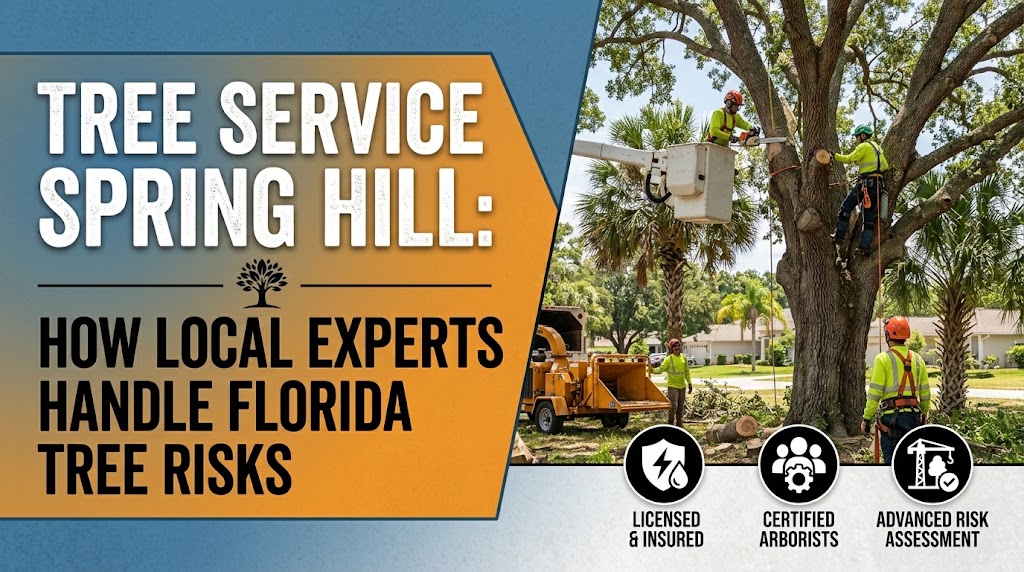
Florida landscapes are filled with beautiful palms, oaks, pines, and other trees that provide shade, privacy, and natural beauty. However, the state’s intense heat, heavy rainfall, strong winds, and hurricane activity can create serious tree-related risks. Property owners in Spring Hill need to pay attention to tree health and stability throughout the year.
Professional tree care can help identify potential problems before they become expensive or dangerous. Local specialists understand the conditions that affect trees in the area and can recommend practical solutions based on the tree species, property layout, and current risks.
Understanding Common Tree Risks in Spring Hill
Trees in Spring Hill face several environmental challenges. While healthy trees can withstand normal weather conditions, structural weaknesses, disease, decay, and improper growth can make them more vulnerable.
Storm and Wind Damage
Florida storms can produce powerful winds and heavy rainfall. These conditions may break branches, split trunks, or cause unstable trees to fall. Trees with large canopies can be particularly vulnerable because strong winds place additional pressure on their branches and root systems.
After a major storm, property owners should inspect trees for hanging branches, cracked limbs, exposed roots, and leaning trunks. Some damage may not be immediately obvious, which is why a professional assessment can be helpful.
Weak and Overgrown Branches
Dead, damaged, or weak branches can become hazards when they are located near roofs, driveways, sidewalks, fences, and power lines. Overgrown branches may also block visibility or interfere with structures.
Professional pruning can reduce these risks by removing problematic growth while maintaining the tree’s natural structure.
Disease and Decay
Florida’s warm and humid environment can contribute to conditions that encourage fungal problems, pests, and decay. Trees showing unusual leaf loss, dead branches, cavities, fungal growth, or declining bark may require closer inspection.
Identifying a problem early can sometimes make it possible to preserve the tree rather than remove it.
How Local Tree Professionals Assess Risk
Local tree specialists typically begin by evaluating the overall condition of the tree and its surroundings. This involves more than simply looking at the leaves.
Inspecting the Tree’s Structure
Professionals examine the trunk, major branches, root flare, and canopy for visible signs of weakness. They may look for cracks, cavities, included bark, decay, leaning, or poorly attached branches.
The location of the tree also matters. A structurally compromised tree beside a house presents a greater concern than a similar tree standing in an isolated part of a large property.
Evaluating the Surrounding Property
Tree risks often depend on what could be affected if a branch or tree falls. Experts consider nearby homes, garages, vehicles, utility lines, fences, walkways, and other structures.
This helps property owners prioritize the trees that require immediate attention.
Considering Florida Weather Conditions
Local professionals understand that seasonal storms can significantly increase tree hazards. Preparing trees before hurricane season may reduce the likelihood of branch failures and other problems.
Routine maintenance can also make it easier to identify developing weaknesses before severe weather arrives.
The Importance of Professional Pruning
Pruning is one of the most effective ways to manage certain tree risks. However, improper trimming can create additional problems.
Professional pruning focuses on removing dead, diseased, damaged, or poorly positioned branches while preserving the tree’s structural integrity.
Avoiding Over-Pruning
Removing too much foliage can stress a tree and encourage weak regrowth. Excessive cutting can also expose branches and the trunk to harsh sunlight.
Qualified professionals understand how much growth can safely be removed based on the tree species, condition, age, and location.
Removing Dangerous Branches
Branches hanging over roofs, driveways, patios, and high-traffic areas deserve particular attention. Removing hazardous growth can help protect people and property.
Tree service spring hill is valuable for managing heavy growth, storm damage, weak branches, and tree hazards common in Florida landscapes. Property owners can benefit from professional evaluations that identify potential problems and provide appropriate maintenance recommendations.
When Tree Removal Becomes Necessary
Pruning and other maintenance methods can address many tree problems, but they cannot solve every situation. Sometimes removal is the safest option.
Signs a Tree May Need Removal
A professional may recommend removal when a tree has severe structural damage, extensive decay, significant root problems, or a dangerous lean. Trees that have suffered major storm damage may also become too unstable to preserve.
Dead trees can become particularly hazardous because branches and trunks may deteriorate over time.
Protecting Nearby Structures
A tree that is severely compromised and located close to a home may present a substantial risk. Removing it before failure can prevent costly property damage and reduce the possibility of injury.
Professional removal is especially important when large trees are near buildings or utility lines because specialized equipment and safety procedures may be necessary.
Preparing Trees for Florida Storms
Storm preparation should ideally happen before severe weather develops. Waiting until a hurricane or major storm is approaching can make it harder to address potential hazards.
Schedule Routine Inspections
Regular inspections can reveal dead branches, weak attachments, decay, and other concerns. Addressing these problems early may improve a tree’s ability to withstand challenging weather.
Maintain Healthy Growth
Proper pruning, appropriate watering, mulching, and monitoring for pests can support overall tree health. Healthy trees are generally better positioned to tolerate environmental stress than neglected or declining trees.
Watch for Changes After Storms
Even trees that appear healthy before a storm should be checked afterward. New cracks, broken branches, exposed roots, and changes in the tree’s position can indicate hidden structural damage.
Why Choosing Local Tree Experts Matters
Local professionals bring knowledge of regional growing conditions and common Florida tree problems. They can recognize how weather, soil, tree species, and property conditions interact.
They can also help homeowners determine whether a tree requires pruning, additional monitoring, treatment, or removal. This approach can prevent unnecessary work while addressing genuine safety concerns.
Hiring trained professionals is particularly important for large trees, trees near electrical lines, and emergency situations involving storm-damaged branches.
FAQs About Tree Service in Spring Hill
How often should trees in Spring Hill be inspected?
A routine inspection every one to three years can be helpful for many established trees. Trees that are damaged, aging, or located near structures may need more frequent evaluation.
Can pruning help trees withstand Florida storms?
Proper pruning can help reduce certain structural risks by removing dead, damaged, or weak branches. However, pruning cannot guarantee that a tree will survive severe hurricane-force conditions.
What are signs of a dangerous tree?
Warning signs can include significant leaning, large cracks, dead branches, cavities, extensive decay, exposed or damaged roots, and major changes in the canopy. A professional should evaluate trees showing serious structural concerns.
Should I remove a tree after storm damage?
Not necessarily. Some storm-damaged trees can be stabilized or properly pruned. However, severe trunk damage, extensive root failure, or major structural instability may make removal necessary. A professional assessment can help determine the safest option.
Is tree removal safe to do myself?
Large tree removal can be dangerous, particularly when trees are close to buildings, vehicles, or utility lines. Professional tree crews have the equipment and experience needed to manage these risks safely.
Conclusion
Florida trees provide valuable shade, beauty, and environmental benefits, but they can also create hazards when weakened by storms, disease, decay, poor structure, or uncontrolled growth. Property owners in Spring Hill can reduce these risks through regular inspections, proper pruning, storm preparation, and timely removal when necessary.
Working with local tree professionals provides a practical way to protect both trees and property. By addressing problems early and maintaining healthy growth, homeowners can enjoy safer and healthier landscapes throughout the year.