
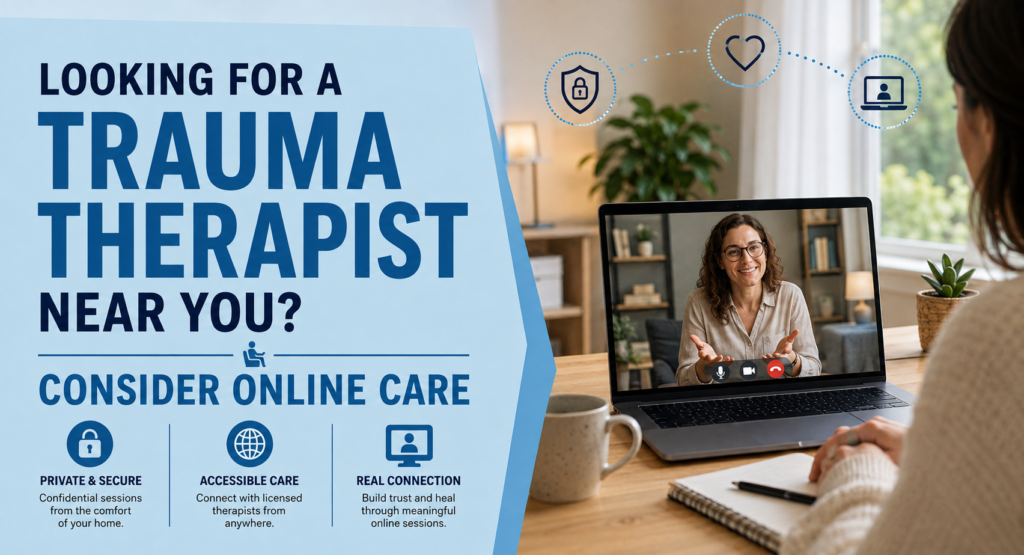
Finding the right therapist after experiencing trauma can feel overwhelming. You may want professional support but struggle to find a specialist nearby who understands your experiences and treatment goals. Scheduling, transportation, work responsibilities, and concerns about visiting a clinic can also make traditional therapy difficult.
Online therapy offers another option. Through secure video sessions and other telehealth services, people can connect with qualified mental health professionals without traveling to an office. For Florida residents, telehealth can make it easier to explore trauma-focused care while remaining in a familiar and comfortable environment. Florida recognizes telehealth for mental health professions, including psychologists, clinical social workers, mental health counselors, psychotherapists, and marriage and family therapists.
What Is Trauma Therapy?
Trauma therapy is a form of mental health treatment designed to help people process and cope with distressing experiences. Trauma can result from many situations, including accidents, abuse, violence, natural disasters, serious illness, loss, or other events that leave a person feeling unsafe or overwhelmed.
Trauma may affect emotional well-being, relationships, sleep, concentration, and everyday activities. Some people experience anxiety, fear, intrusive memories, avoidance, irritability, or feelings of detachment.
A trauma-informed therapist works with clients in a way that emphasizes safety, trust, collaboration, and personal choice. Treatment is generally tailored to the individual’s experiences rather than following one approach for everyone.
Why Consider Online Trauma Therapy?
Greater Access to Specialized Care
One of the biggest advantages of online therapy is access. When you search for a therapist in your immediate area, you may find only a limited number of providers. Online care can expand your options beyond a small geographic radius.
Online trauma therapy connects Florida residents with specialists statewide. Searching for a trauma therapist near me can therefore include professionals who provide secure telehealth sessions to eligible clients rather than only therapists with offices in your neighborhood.
Florida’s Department of Health states that telehealth may be used for services such as assessment, diagnosis, consultation, treatment, and monitoring.
Comfort and Privacy
Discussing traumatic experiences can be difficult. Being able to attend a session from a private and familiar setting may help some people feel more comfortable opening up.
For example, a client may choose a quiet room at home where they feel secure. Eliminating the waiting room and commute can also make therapy feel less intimidating.
However, privacy is important. Before beginning an online session, choose a private space where conversations cannot easily be overheard.
Easier Scheduling
Work, school, childcare, transportation, and other responsibilities can make regular appointments challenging. Online sessions may reduce some of these barriers because there is no need to travel to and from an office.
This convenience can make it easier to maintain consistency, which is important when working toward long-term therapeutic goals.
What Trauma-Focused Treatment May Involve
Understanding Your Experiences
Early sessions may focus on establishing trust and understanding your history. A therapist may ask about symptoms, current concerns, relationships, coping strategies, and the ways trauma affects daily life.
You should not feel pressured to share everything immediately. A good therapeutic relationship allows you to move at a pace that feels manageable.
Learning Coping Strategies
Depending on your circumstances and treatment plan, therapy may involve techniques for managing stress, anxiety, emotional reactions, or difficult memories.
Developing healthy coping skills can help you feel more prepared to handle challenging emotions between sessions.
Processing Traumatic Memories
Some trauma-focused approaches involve gradually addressing traumatic memories or beliefs associated with the experience. The specific approach depends on the therapist’s training, your needs, and your readiness.
A qualified professional can explain the treatment process and help determine whether a particular method is appropriate.
How to Choose an Online Trauma Therapist
Check Professional Credentials
Before starting therapy, verify that the provider is appropriately licensed or authorized to provide telehealth services to clients in Florida. Florida’s Department of Health explains that Florida-licensed practitioners can provide telehealth services to Florida patients without additional telehealth registration. Out-of-state practitioners providing telehealth to Florida residents may need to meet Florida registration requirements.
Look for Trauma Experience
Not every therapist specializes in trauma. When comparing providers, look for information about their experience with trauma-related concerns and the therapeutic approaches they use.
You can also ask whether they have worked with concerns similar to yours and what treatment process they typically recommend.
Consider Communication Style
A strong therapeutic relationship matters. During an initial consultation, consider whether you feel heard, respected, and comfortable asking questions.
You do not need to choose the first therapist you contact. Finding someone whose communication style and approach fit your needs can make the process more productive.
Preparing for Your First Online Session
Before your appointment, test your internet connection, camera, microphone, and headphones if necessary. Find a quiet and private location where you can participate without interruptions.
It can also help to write down questions beforehand. You might ask about the therapist’s experience with trauma, treatment methods, session frequency, privacy practices, fees, and cancellation policies.
If you become emotionally overwhelmed during a session, tell your therapist. They can help you slow down, pause, or use appropriate grounding strategies.
When Online Therapy May Not Be Enough
Online therapy can be a valuable option, but it is not appropriate for every situation. Someone experiencing an immediate psychiatric or medical emergency may require urgent in-person assistance or emergency services.
If you are in immediate danger or believe you may hurt yourself or someone else, contact local emergency services or an appropriate crisis resource rather than relying on a routine therapy appointment.
Frequently Asked Questions
Is online trauma therapy effective?
Online therapy can provide access to professional mental health treatment through telehealth. Whether it is appropriate depends on the person’s circumstances, symptoms, treatment needs, technology access, and clinical assessment.
Can I see a trauma therapist online in Florida?
Yes. Florida permits qualifying mental health professionals to provide telehealth services. Providers must follow applicable professional standards and licensing requirements.
How do I know if a therapist specializes in trauma?
Review the therapist’s professional profile and ask directly about trauma-related experience, training, and treatment approaches during an initial consultation.
Do I have to discuss my trauma during the first session?
Not necessarily. Your therapist may begin by learning about your current concerns, goals, symptoms, and history. You can discuss your comfort level and establish a pace that works for you.
Is online therapy private?
Telehealth providers are required to maintain patient medical records and confidentiality according to applicable Florida requirements. You should also attend sessions from a private location and use a secure internet connection whenever possible.
Conclusion
Finding trauma support does not always require traveling to a therapist’s office. Online care can provide a convenient way to connect with qualified professionals while giving clients more flexibility in choosing a provider.
For Florida residents, telehealth can expand access to mental health professionals across the state. The key is to choose a properly licensed provider with relevant trauma experience and an approach that makes you feel safe and supported. If trauma is affecting your daily life, relationships, or emotional well-being, exploring professional support can be an important step toward healing.