
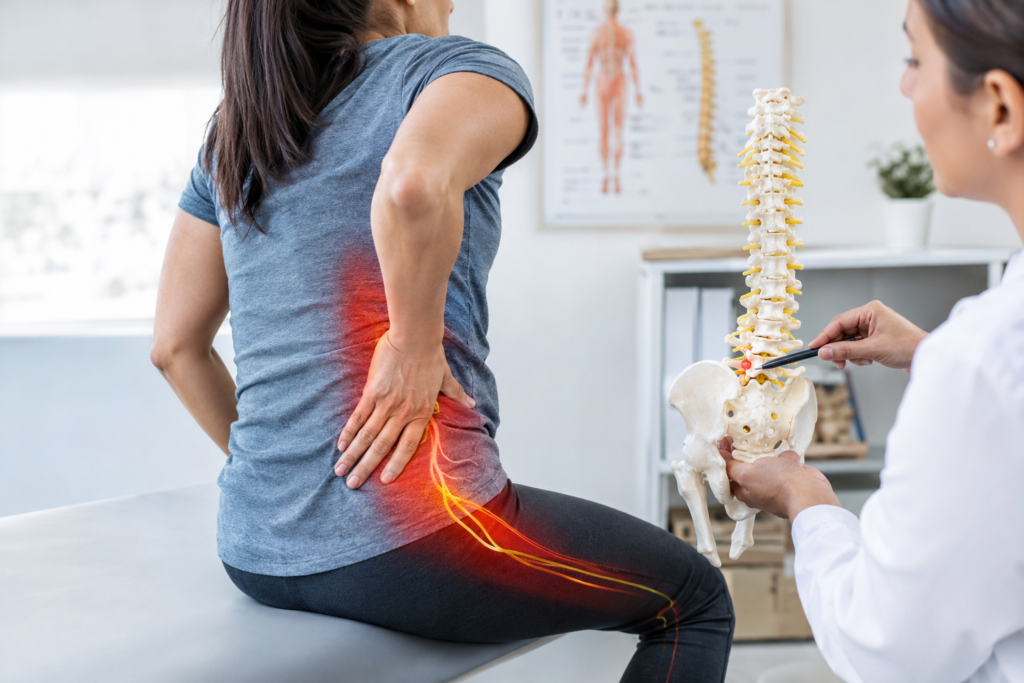
What Is a Herniated Disc?
The spine consists of vertebrae separated by intervertebral discs. These discs act as cushions, absorb everyday forces, and allow the spine to bend and rotate. Each disc has a tough outer layer and a softer, gel-like center.
A disc may herniate because of gradual age-related changes, repetitive strain, sudden loading, or an injury. As the disc changes, its inner material can protrude and sometimes affect a nearby nerve root.
Not every herniated disc causes symptoms. Some people discover a disc abnormality during imaging performed for an unrelated reason. In other cases, the location of the herniation and its effect on surrounding structures can produce noticeable pain or neurological symptoms.
Recognizing the combination, distribution, and progression of herniated disc symptoms is often more useful than focusing on a single complaint.
Common Herniated Disc Symptoms to Watch For
1. Pain That Travels Along an Arm or Leg
One of the most recognizable patterns involves pain that radiates away from the spine. A herniated disc in the lower back may irritate a nerve that supplies the buttock and leg. This can cause sciatica, which commonly produces pain traveling from the lower back or buttock down one leg.
A herniated disc in the neck may cause pain that travels into the shoulder, arm, or hand. The discomfort may follow a particular pathway depending on which nerve is affected.
Radiating pain may feel sharp, burning, electric, or shooting. It may become more noticeable when sitting, bending, coughing, sneezing, or performing certain movements.
However, radiating pain does not automatically confirm a herniated disc. Other conditions can irritate spinal nerves or produce similar symptoms.
2. Numbness and Tingling
Numbness and tingling can occur when a herniated disc affects nerve function. People may describe pins and needles, reduced sensation, or an unusual feeling in part of an arm, hand, leg, or foot.
The location of these sensations can offer useful clues. For example, symptoms concentrated in particular fingers may suggest irritation of a nerve associated with the cervical spine. Sensory changes along the lower leg or into the foot may point toward a lumbar nerve problem.
These patterns are not identical for everyone. Nerve pathways overlap, and symptoms may vary according to the location and extent of the disc problem.
Persistent, worsening, or newly developing numbness deserves medical assessment, particularly when accompanied by weakness or difficulty walking.
3. Muscle Weakness
A herniated disc can sometimes interfere with the signals that travel from the spinal cord through the nerve roots to the muscles. This may cause weakness in the affected arm or leg.
Possible examples include difficulty lifting the front of the foot, standing on the toes, gripping objects, raising an arm, or performing movements that were previously easy.
Weakness is particularly important because it can indicate a neurological problem rather than pain alone. A person may notice that one leg feels less reliable, the foot catches while walking, or objects slip from one hand.
New or progressive muscle weakness should be evaluated promptly. Sudden or substantial weakness requires urgent medical attention.
4. Pain That Changes With Position or Movement
Some people notice that symptoms intensify during prolonged sitting, forward bending, lifting, twisting, coughing, or sneezing. These activities can change pressure around the spinal discs and affect irritated nerves.
Others experience relief when changing positions, walking gently, or lying in a comfortable position. The response depends on the specific condition and the individual.
Position-related changes can help describe a symptom pattern during an examination, but they are not a reliable stand-alone test for a herniated disc. Muscle strains, joint problems, and other spinal conditions can also produce movement-related pain.
5. Localized Neck or Back Pain
Although nerve-related symptoms often attract attention, a herniated disc may also cause pain near the affected spinal region.
A lumbar disc problem may be associated with lower back discomfort, stiffness, or pain during certain movements. A cervical disc problem may cause neck pain or discomfort around the shoulder blades.
Some herniated discs cause little localized pain, while others produce substantial discomfort. The absence of severe back pain does not rule out nerve involvement, especially when symptoms primarily affect an arm or leg.
How Symptoms Differ by Spinal Level
The location of a herniated disc influences which nerves may be affected and where symptoms appear. Understanding the general differences can help people describe their experiences more accurately to a healthcare professional.
Cervical Herniated Disc: Neck, Shoulder, Arm, and Hand
The cervical spine is located in the neck. A herniated disc in this region may irritate a nerve root that supplies the shoulder, arm, or hand.
Common patterns include:
- Neck pain that spreads into one shoulder or arm.
- Tingling or numbness in certain fingers.
- Arm or hand weakness.
- Pain that becomes more noticeable with particular neck movements.
When a cervical disc compresses the spinal cord rather than only a nerve root, symptoms can be more widespread. These may include problems with balance, difficulty walking, reduced hand coordination, or weakness involving multiple limbs.
Possible spinal cord involvement requires prompt medical evaluation.
Thoracic Herniated Disc: Mid-Back and Chest-Area Symptoms
The thoracic spine is the middle portion of the back. Herniated discs in this region are less common than those in the neck or lower back.
Symptoms may include mid-back pain that wraps around the chest or ribs. Depending on the structures affected, a person may experience unusual sensations around the torso or neurological symptoms involving the legs.
Because chest-area discomfort can have causes unrelated to the spine, it should not automatically be attributed to a thoracic disc problem. New chest pain, especially when accompanied by shortness of breath, sweating, faintness, or pressure, requires emergency assessment.
Lumbar Herniated Disc: Lower Back, Buttock, and Leg
The lumbar spine is the lower portion of the back and is a common location for disc herniation.
Symptoms may include:
- Lower back pain.
- Pain that travels into one buttock and down the leg.
- Tingling or numbness in the leg or foot.
- Weakness affecting specific leg or foot movements.
- Increased discomfort with certain lifting, bending, or sitting activities.
A lumbar herniation can produce sciatica when it irritates the relevant nerve roots. However, not all leg pain is sciatica, and not all sciatica is caused by a herniated disc.
The distribution of pain, strength, sensation, reflexes, and movement helps a clinician determine which causes are most likely.
Recognizing the Pattern Instead of One Isolated Symptom
A single symptom rarely provides enough information to identify a herniated disc. The overall pattern matters.
For example, lower back pain accompanied by pain traveling down one leg, tingling in the foot, and weakness during a particular movement may suggest lumbar nerve-root irritation. Neck discomfort combined with radiating arm pain and changes in finger sensation may suggest a cervical nerve problem.
In contrast, discomfort that stays localized and does not involve neurological symptoms may have a different explanation, although a herniated disc cannot be excluded based on that feature alone.
Pay attention to several details:
- Location: Where does the discomfort begin, and where does it travel?
- Sensation: Is the pain aching, sharp, burning, or electric? Is there numbness or tingling?
- Movement: Which positions or activities worsen or relieve symptoms?
- Strength: Is there any new difficulty lifting, gripping, walking, or controlling a limb?
- Progression: Are symptoms improving, remaining stable, or getting worse?
- Duration: When did the symptoms begin, and have they changed over time?
Keeping a brief symptom record can make a clinical appointment more productive. It can also help distinguish a temporary episode from a patte
Red Flags That Require Immediate Evaluation
Although many herniated discs improve without surgery, certain symptoms can indicate serious nerve compression or another medical emergency. Recognizing these warning signs is essential.
Seek emergency medical attention if you experience any of the following:
- Loss of bladder or bowel control: New incontinence or difficulty controlling urination or bowel movements.
- Difficulty urinating: Inability to urinate or trouble starting despite feeling that your bladder is full.
- Numbness around the groin or buttocks: Loss of sensation in the area that would contact a saddle, sometimes called saddle anesthesia.
- Rapidly worsening weakness: Sudden or progressive weakness in an arm or leg, especially when accompanied by difficulty walking.
- Severe neurological changes: New problems with coordination, walking, or sensation that develop quickly.
These symptoms may indicate cauda equina syndrome or significant spinal cord compression. Both conditions can require emergency treatment to reduce the risk of lasting neurological damage. Do not wait for a routine chiropractic or medical appointment if these warning signs develop.
Other symptoms, including fever, unexplained weight loss, severe persistent night pain, or pain following a significant accident, also warrant prompt medical assessment. They may point to conditions other than a herniated disc that need investigation.
How Is a Herniated Disc Diagnosed?
A healthcare professional typically begins by reviewing the patient’s symptoms, medical history, and the circumstances surrounding the onset of pain. The examination may include checking muscle strength, reflexes, sensation, walking ability, and movements that reproduce symptoms.
The distribution of pain and neurological changes can help identify which spinal nerves may be affected. However, symptoms alone do not always establish the exact cause.
Imaging is not necessary for every episode of back pain. An MRI may be recommended when symptoms are persistent, neurological deficits are present, or the results could change treatment decisions. Other tests may be considered depending on the suspected condition.
It is important to interpret imaging findings alongside the physical examination. Disc abnormalities can appear in people who have no pain, so finding a herniation on an MRI does not automatically mean it is responsible for every symptom.
Treatment Options for Herniated Disc Symptoms
Treatment depends on symptom severity, the location of the disc problem, neurological findings, and the person’s overall health.
Conservative Care
Many people improve with nonsurgical treatment. A healthcare professional may recommend maintaining tolerable daily activities, temporarily modifying movements that aggravate symptoms, and gradually returning to normal activity.
Depending on the individual case, treatment may include physical therapy, guided exercises, and appropriate pain-relief medication. Prolonged bed rest is generally discouraged because inactivity can contribute to stiffness and reduced strength.
Physical Therapy and Movement Guidance
Physical therapy can help improve mobility, build strength, and support a gradual return to daily activities. Exercises should be selected according to the person’s symptoms and physical examination findings.
A movement that helps one person may aggravate another person’s symptoms. For that reason, an individualized plan is preferable to attempting aggressive stretches or spinal exercises based on online advice alone.
Chiropractic Evaluation
Some people consider chiropractic care when dealing with neck or back discomfort. A Chiropractor Naples residents consult may assess movement limitations, review symptoms, and help determine whether conservative musculoskeletal care is appropriate.
However, suspected disc herniation requires careful evaluation, especially when nerve symptoms are present. Chiropractic care should not replace medical assessment for progressive weakness or other neurological warning signs. High-velocity spinal manipulation may be inappropriate in certain cases, including suspected spinal cord or cauda equina compression.
A qualified healthcare professional can help determine which treatments are suitable and whether referral for medical or specialist evaluation is needed.
When Surgery May Be Considered
Surgery is not necessary for most herniated discs. It may be considered when symptoms remain severe despite appropriate nonsurgical treatment, when significant nerve dysfunction develops, or when emergency compression requires urgent intervention.
The decision depends on the diagnosis, symptom progression, examination results, and expected benefits and risks. Early evaluation is particularly important when neurological function is deteriorating.
Frequently Asked Questions
1. What are the most common herniated disc symptoms?
Common symptoms include localized neck or back pain, pain radiating into an arm or leg, tingling, numbness, and muscle weakness. The exact pattern depends on the location of the herniation and whether nearby nerves are affected.
2. Can you have a herniated disc without back pain?
Yes. Some people experience little or no back pain but notice symptoms in an arm, hand, buttock, leg, or foot. Others have a herniated disc that causes no symptoms at all.
3. How can I tell if my leg pain comes from a herniated disc?
Pain that travels from the lower back or buttock down one leg, particularly when accompanied by tingling, numbness, or weakness, may suggest nerve irritation. However, several conditions can cause similar symptoms, so a clinical evaluation is needed to identify the cause.
4. Do herniated disc symptoms get worse when sitting?
They can. Some people experience increased pain while sitting, bending forward, coughing, or sneezing. Others have different symptom patterns. Changes in pain with position may provide useful information but cannot confirm a herniated disc on their own.
5. When should I seek medical attention for herniated disc symptoms?
Arrange a medical assessment if pain radiates into an arm or leg, or if you develop persistent numbness, tingling, or weakness. Seek emergency care for new bladder or bowel dysfunction, numbness around the groin or buttocks, or rapidly progressing weakness.
6. Can a herniated disc heal without surgery?
Yes. Many symptomatic herniated discs improve over time with appropriate conservative treatment. The course of recovery varies, and some people need additional treatment depending on pain severity and neurological involvement.
7. Is an MRI always necessary to diagnose a herniated disc?
No. The initial evaluation often relies on medical history and a physical examination. An MRI may be appropriate when symptoms persist, significant neurological findings are present, or imaging is needed to guide treatment.
8. Should I see a chiropractor for a suspected herniated disc?
A chiropractic assessment may help evaluate certain musculoskeletal symptoms, but it is not a substitute for medical diagnosis when nerve compression is suspected. Discuss radiating pain, numbness, or weakness with an appropriate healthcare professional before beginning treatment, and seek emergency care for red-flag symptoms.
Conclusion
Recognizing herniated disc symptoms involves looking at the complete pattern rather than focusing on back or neck pain alone. Radiating pain, changes in sensation, muscle weakness, and symptoms associated with particular spinal levels can provide important clues about possible nerve involvement.
The cervical spine may produce symptoms in the shoulders, arms, and hands, while lumbar disc problems can affect the buttocks, legs, and feet. Thoracic disc problems may cause mid-back or torso symptoms. These patterns can guide an evaluation, but they cannot establish a diagnosis without considering other possible causes.
Most importantly, new or progressive neurological symptoms should never be ignored. Bladder or bowel dysfunction, saddle numbness, and rapidly worsening weakness require immediate medical evaluation.
Understanding the pattern of discomfort, documenting symptom changes, and seeking appropriate professional guidance can help people make informed decisions about diagnosis and treatment while protecting their long-term spinal health.