
Removing a tree from your property does not always mean the job is completely finished. Even after a tree has been cut down, the remaining stump can continue to affect the appearance, safety, and usability of your yard. Tree stumps can become obstacles, attract unwanted insects, encourage regrowth, and make landscaping projects more difficult. This is where stump grinding becomes a practical solution.
Stump grinding is a professional process that uses specialized equipment to break a tree stump into small wood chips. Instead of digging out the entire root system, the visible stump is ground below the surrounding soil level. This provides homeowners with a cleaner surface that can be used for grass, landscaping, or other outdoor improvements.
What Is Stump Grinding?
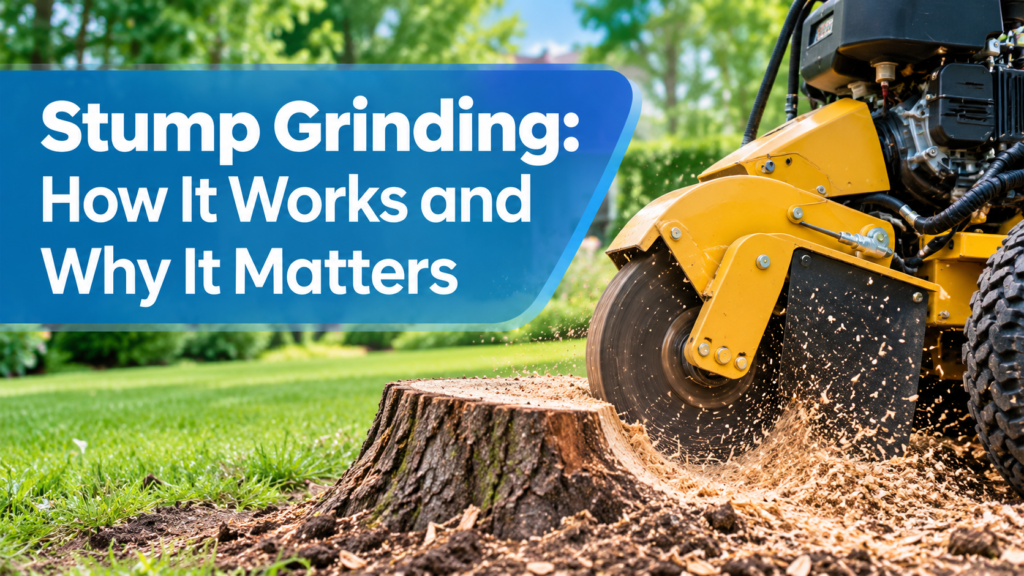
Stump grinding is a method of removing the remaining portion of a tree after the trunk has been cut down. A professional uses a stump grinder equipped with a rotating cutting wheel. The machine gradually chips away at the stump until it is reduced to wood fragments.
Depending on the size, type, and location of the stump, the grinding process can take anywhere from several minutes to longer for larger or more complicated stumps. The grinder can typically remove the stump several inches below ground level, although the exact depth depends on the equipment and the project requirements.
Unlike complete stump removal, grinding does not require the entire root system to be excavated. This makes it less disruptive to the surrounding landscape.
How Does Stump Grinding Work?
1. Inspecting the Stump
Before grinding begins, professionals inspect the stump and the surrounding area. They look for obstacles such as rocks, irrigation lines, utility features, fencing, and other structures that could affect the work.
The size and condition of the stump are also considered when determining which equipment and approach should be used.
2. Preparing the Work Area
The area around the stump is cleared of objects that could interfere with the grinder. Professionals may also establish a safety zone to keep people and pets away from flying wood chips and operating equipment.
Proper preparation helps reduce the possibility of property damage and allows the grinding equipment to operate more effectively.
3. Grinding the Stump
The grinder’s cutting wheel is positioned over the stump. The operator moves the machine from side to side, gradually shaving away the wood.
The process continues until the stump has been reduced to the desired depth. Larger stumps may require several passes before enough material has been removed.
4. Cleaning Up the Area
After grinding, the remaining wood chips are collected or spread into the resulting hole. Depending on the property owner’s plans, the area can then be filled with soil or prepared for new landscaping.
Cleanup is an important part of the process because it leaves the property looking more organized and ready for its next use.
Why Stump Grinding Matters
Improves Property Appearance
A large stump can make an otherwise attractive yard look unfinished. Removing it creates a cleaner and more organized appearance.
This can be particularly useful when preparing a property for landscaping, selling a home, or improving outdoor spaces. A stump-free yard provides more flexibility for future projects.
Reduces Tripping Hazards
Tree stumps can create hazards for children, pets, visitors, and anyone walking through the yard. An uneven stump can be difficult to see, particularly when it is covered by grass, leaves, or other vegetation.
Grinding the stump below ground level helps create a more even surface and reduces the risk of people accidentally striking or tripping over it.
Helps Prevent Pest Problems
Old stumps contain decaying wood that can attract insects and other pests. Depending on the condition of the stump, it may provide a food source or shelter for termites, ants, beetles, and other organisms.
Removing the majority of the stump material can reduce potential habitats for unwanted pests and make the area easier to maintain.
Prevents Unwanted Regrowth
Some tree species can produce new shoots from remaining stump or root material. While grinding does not always eliminate every root, reducing the visible stump can help address unwanted growth and make future maintenance easier.
If regrowth is a concern, a professional can explain whether additional treatment or monitoring is appropriate for the particular tree species.
Stump Grinding vs. Stump Removal
Stump grinding and stump removal are not the same process. Grinding focuses on reducing the stump below the soil surface while leaving most of the underground root system in place.
Complete stump removal involves excavating the stump and often a significant portion of its roots. This can require more digging and may disturb the surrounding soil and landscaping.
For many residential properties, grinding is a convenient option because it generally requires less excavation and can leave the surrounding landscape relatively intact.
The right choice depends on what you plan to do with the area. If you want to plant a new tree in the same location or need all root material removed for construction, complete removal may be more appropriate.
When Should You Consider Stump Grinding?
There are several situations when grinding may be worth considering. If a recently removed tree has left a large stump in your yard, grinding can help restore usable space.
It may also be appropriate when a stump is interfering with mowing, landscaping, walkways, patios, or other outdoor improvements. Homeowners planning to install new grass or garden beds may find that removing the stump makes preparation much easier.
Stump grinding removes unsightly stumps and prevents pests regrowth and tripping hazards. Choosing professional stump grinding can provide a safer and more efficient way to deal with unwanted tree remnants while improving the usability of your property.
Benefits of Hiring a Professional
Operating a stump grinder requires proper training and safety awareness. The equipment contains powerful cutting components that can throw wood chips and debris.
Professional operators understand how to position the machine, protect surrounding property, and work around potential obstacles. They can also determine an appropriate grinding depth based on the property’s needs.
Hiring a professional can save homeowners the effort of renting heavy equipment and attempting a difficult project without experience. It also allows the work to be completed efficiently while reducing unnecessary damage to the surrounding landscape.
What Happens After Stump Grinding?
Once the stump has been ground, the remaining hole can be filled with soil. The wood chips produced during grinding can sometimes be used as mulch, although they may also be removed depending on the condition of the material and the homeowner’s plans.
After the area settles, you can consider planting grass, adding landscaping, or using the space for another outdoor improvement. Keep in mind that freshly ground wood material can settle as it decomposes, so additional soil may eventually be needed.
FAQs About Stump Grinding
Is stump grinding the same as removing a stump?
No. Grinding reduces the stump below ground level, while complete stump removal involves excavating the stump and much of its root system.
How long does stump grinding take?
The time depends on the stump’s size, species, location, and condition. Small stumps may be handled relatively quickly, while larger stumps can require more time and multiple passes with the grinder.
Will the tree grow back after stump grinding?
Some species can produce shoots from remaining roots. Grinding significantly reduces the visible stump, but additional measures may sometimes be needed to address persistent regrowth.
Can I plant grass after stump grinding?
Yes. Once the area has been properly cleaned and filled with suitable soil, grass can generally be planted. The soil may need time to settle before the final landscaping is completed.
Is stump grinding safe?
Professional stump grinding can be performed safely when the operator uses appropriate equipment, protective gear, and proper procedures. Homeowners and pets should stay away from the work area while the grinder is operating.
Conclusion
A tree removal project does not have to end with an unattractive stump remaining in the yard. Stump grinding offers an efficient way to reduce unwanted stumps while improving the appearance, safety, and usability of outdoor spaces.
By grinding the stump below the soil surface, homeowners can reclaim valuable yard space, reduce potential pest habitats, limit tripping hazards, and prepare the area for future landscaping. When the job involves large stumps, difficult locations, or specialized equipment, working with an experienced professional can make the process safer and more convenient.