
Trees add beauty, shade, and value to properties throughout Dade City. They help create a natural Florida landscape and make homes feel more inviting. However, not every tree can safely remain in place. Some trees become hazardous because of disease, storm damage, weak roots, decay, or poor location near homes, power lines, driveways, and outdoor living spaces.
When a tree becomes unsafe, professional removal may be the best option. Tree removal is not simply cutting down a tree. It involves planning, proper equipment, safety procedures, and careful protection of the surrounding property.
Why Tree Removal May Be Necessary
Tree removal is often needed when a tree creates a safety concern. A dead or dying tree can lose branches without warning. A leaning tree may fall during heavy rain or strong winds. Roots can also become unstable if the soil is too wet, damaged, or disturbed.
In Dade City, storms, humidity, insects, and disease can all affect tree health. Property owners may also need removal when a tree grows too close to a structure, blocks new construction, damages pavement, or interferes with utility lines.
Removing a hazardous tree at the right time can prevent major property damage and reduce risks for families, visitors, and neighbors.
Safety Comes First in Tree Removal
Assessing the Tree Before Work Begins
A safe tree removal project starts with a detailed inspection. Professionals look at the tree’s height, trunk condition, branch structure, lean, root stability, and proximity to buildings. They also evaluate nearby obstacles such as fences, sheds, pools, vehicles, landscaping, and electrical lines.
This assessment helps determine the safest removal method. Some trees can be removed in sections. Others may require climbing gear, cranes, ropes, or bucket trucks. The more complex the location, the more planning is needed.
Using the Right Equipment
Tree removal can be dangerous without the correct tools. Professional crews may use chainsaws, rigging ropes, harnesses, lifts, wedges, protective mats, and hauling equipment. These tools allow workers to control how branches and trunk sections are cut and lowered.
Proper equipment also helps protect the property. Instead of letting branches fall freely, crews can lower them carefully to avoid damage to roofs, lawns, gardens, and nearby structures.
Choosing the Right Timing
Removing Trees Before Storm Season
Timing matters when it comes to tree removal. Waiting too long can increase the risk of sudden failure, especially before Florida’s storm season. If a tree is already leaning, cracked, hollow, or dropping large limbs, it should be inspected as soon as possible.
Removing hazardous trees before severe weather arrives can help prevent emergency situations. It is often safer and less stressful to schedule removal during calm conditions rather than after a storm has already caused damage.
Considering Property Use and Access
Property owners should also think about access and scheduling. If the tree is near a driveway, business entrance, or outdoor space, removal should be planned during a time that causes the least disruption.
For commercial properties, this may mean scheduling work during slower business hours. For homeowners, it may mean preparing the yard, moving vehicles, and clearing outdoor furniture before the crew arrives.
Protecting Homes, Landscaping, and Outdoor Features
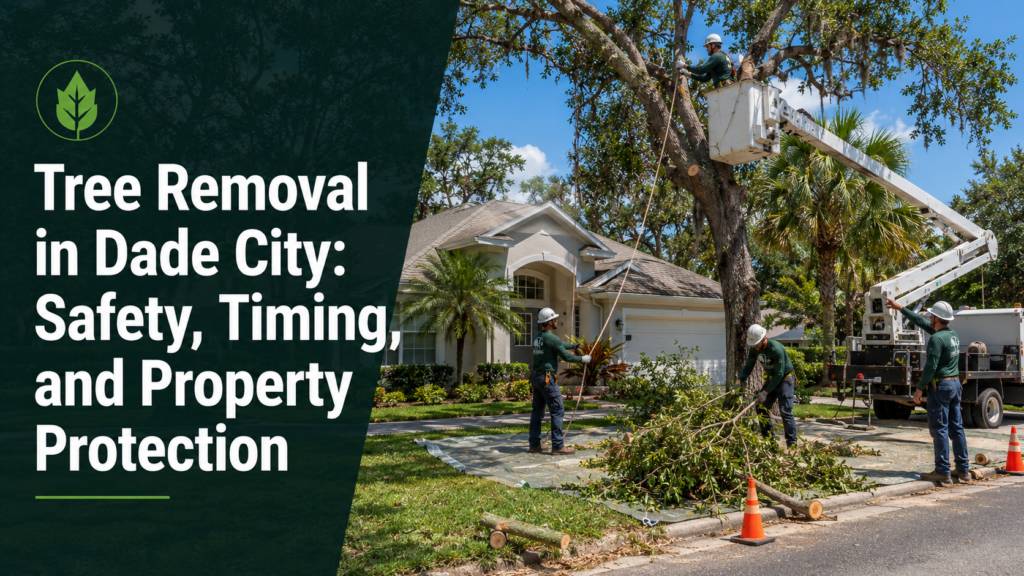
Tree removal in Dade City requires careful planning to protect nearby structures, landscaping, and people while safely removing hazardous trees.
Property protection is a major part of professional tree removal. A careless approach can damage roofs, gutters, fences, irrigation systems, gardens, and lawns. This is why experienced crews plan the drop zone, use controlled cutting techniques, and place protective materials where needed.
Protecting the Lawn and Landscape
Heavy branches, logs, and equipment can leave marks on grass and landscaping. Crews may use mats or tarps to reduce lawn damage. They may also move smaller plants, plan debris paths, and keep equipment away from delicate areas.
In landscaped Florida yards, this is especially important because palms, shrubs, flower beds, and irrigation systems are often located close to larger trees.
Protecting Structures and Hardscapes
Homes, garages, patios, driveways, pool cages, and walkways must be considered before removal begins. If a tree hangs over a roof or structure, it may need to be dismantled piece by piece.
Controlled removal helps prevent falling limbs from hitting valuable property features. It also allows crews to work in tight spaces where a full tree drop would be unsafe.
DIY Tree Removal vs Professional Service
Why DIY Can Be Risky
Some property owners consider removing a tree themselves to save money. This may seem possible for small trees, but larger trees can be unpredictable. A tree may fall in the wrong direction, split during cutting, or drop heavy branches suddenly.
DIY removal also creates risks of personal injury. Chainsaws, ladders, unstable branches, and overhead hazards can make the job dangerous. Without proper training, even a simple looking project can become costly.
Benefits of Hiring Professionals
Professional tree removal companies understand how to manage risk. They know how to inspect the tree, plan the cut, use rigging equipment, and remove debris safely. They can also identify hazards that may not be obvious to the property owner.
Hiring professionals can save time, reduce liability, and help ensure the tree is removed without unnecessary property damage.
Cleanup and Debris Removal
Tree removal does not end when the tree is down. Branches, logs, sawdust, and leaves must be cleared from the property. Some companies haul away debris, cut wood into manageable sections, or offer stump grinding as an additional service.
A clean worksite is important for safety and appearance. After removal, property owners should be able to use their yard, driveway, or business area without dealing with piles of debris.
When to Request a Tree Inspection
Property owners should request an inspection if a tree shows warning signs such as dead branches, fungal growth, cracks in the trunk, hollow areas, sudden leaning, exposed roots, or repeated limb drop. Trees damaged by storms should also be checked quickly.
An inspection can help determine whether the tree needs removal or if trimming, cabling, or health treatment may be enough.
Conclusion
Tree removal in Dade City is an important service for protecting homes, businesses, landscapes, and people. The safest approach begins with proper inspection, careful timing, professional equipment, and a clear plan for protecting the surrounding property.
While trees are valuable, hazardous trees can create serious risks if left untreated. By scheduling removal before problems become emergencies, property owners can prevent damage, improve safety, and maintain a cleaner, healthier outdoor space.
FAQs
When should a tree be removed?
A tree may need removal if it is dead, diseased, leaning, cracked, hollow, storm damaged, or growing too close to a structure or utility line.
Is tree removal dangerous?
Yes. Tree removal can be dangerous because of heavy limbs, unstable trunks, chainsaws, ladders, and nearby structures. Professional equipment and training help reduce these risks.
What is the best time to remove a tree in Dade City?
The best time is before the tree becomes an emergency hazard. Many property owners schedule removal before storm season or after noticing signs of damage or decay.
Can tree removal damage my yard?
It can if not handled properly. Professional crews use controlled cutting methods, protective materials, and careful debris handling to reduce damage to lawns and landscaping.
Do I need stump grinding after tree removal?
Stump grinding is optional, but it is often recommended if you want to improve appearance, prevent tripping hazards, and make the area easier to maintain.