
Start With a Professional Roof Inspection
The first step in most roofing projects is a detailed inspection. A roofing professional will look beyond obvious problems such as missing shingles or visible leaks.
The inspection may include an evaluation of:
- Shingles, tiles, or other roof coverings
- Flashing around chimneys, vents, and roof edges
- Valleys where different roof sections meet
- Gutters and drainage areas
- Roof decking
- Signs of moisture intrusion
- Attic ventilation
- Areas around skylights and other penetrations
- Previous repairs or multiple roofing layers
An inspection helps determine whether a repair is practical or whether a roof replacement makes more sense.
For example, a few damaged shingles after a storm may be a straightforward repair. However, widespread deterioration, recurring leaks, damaged decking, or an aging roofing system can indicate that replacing the roof will provide a better long-term solution.
Understand the Roofing Materials Available
Santa Clarita homeowners have several roofing material choices. The right option depends on the home’s design, budget, slope, appearance, maintenance expectations, and applicable building and fire requirements.
Asphalt composition shingles remain a popular choice because they offer a balance of cost, appearance, and durability. Tile can provide a distinctive appearance and long service life, while metal roofing can offer durability and resistance to many environmental conditions.
Fire performance is particularly important in California. CAL FIRE identifies the roof as one of the home’s vulnerable components during wildfire events because windblown embers can land on and ignite vulnerable roofing materials. It recommends Class A-rated roof coverings when it is time to replace a roof.
Santa Clarita also has specific requirements related to fire hazard areas. The city’s current code incorporates the California Wildland-Urban Interface Code for applicable properties in designated Fire Hazard Zones.
This means homeowners should not select roofing materials based solely on appearance or price. The material needs to be appropriate for the property and compliant with current requirements.
Expect a Permit and Inspection Process
One of the most important parts of roofing in Santa Clarita is understanding permitting.
The City of Santa Clarita states that its 2025 California Building Codes and city amendments apply to residential and non-residential projects submitted on or after January 1, 2026. The city also provides Building & Safety resources for permits, inspections, and construction requirements.
Roofing work may require an appropriate reroofing permit and inspection. Homeowners should make sure the contractor understands the local requirements before work starts.
This is more than paperwork. Inspections help verify that important components of the roofing system are installed correctly and that damaged structural areas are addressed.
If your home is located in a fire hazard area, additional requirements may apply. Santa Clarita’s current regulations specifically address roof covering repair and replacement in Fire Hazard Zones.
Prepare for the Possibility of Decking Repairs
When an old roof is removed, the condition underneath becomes much easier to evaluate.
Roof decking can deteriorate because of long-term moisture exposure, previous leaks, age, or other problems. If damaged decking is discovered, those areas may need to be repaired or replaced before the new roof covering is installed.
This is one reason homeowners should be cautious about estimates that seem unusually low. An initial quote may be based on visible conditions, but concealed damage cannot always be identified until existing roofing materials are removed.
A reputable contractor should explain how unexpected repairs are handled before the project begins. Ask whether the estimate includes allowances for damaged decking and how additional work will be approved.
Consider California’s Energy Requirements
Energy efficiency is another consideration during a roofing project.
Santa Clarita’s current information on residential cool-roof requirements notes that when more than 50% of a roof is replaced, roofing products may need to meet applicable minimum cool-roof requirements based on roof slope and other factors.
This can affect material selection. A homeowner choosing between roofing products should consider not only color and appearance but also the product’s performance and whether it satisfies applicable requirements.
A qualified roofing professional can help identify products that work with the home’s design while meeting current code requirements.
Protect Your Home During Construction
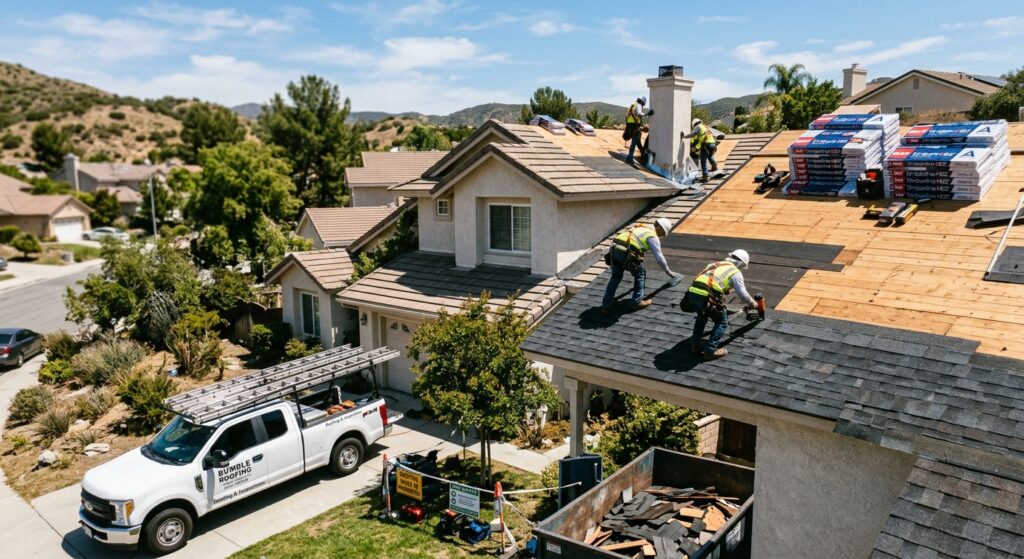
A roofing project can temporarily disrupt your normal routine. Roofing crews typically remove old materials, prepare the roof surface, install the new roofing system, and clean up construction debris.
Before work begins, homeowners should consider moving fragile outdoor items away from the house. Patio furniture, decorative objects, vehicles, and other belongings may need to be relocated depending on the property’s layout.
It is also worth discussing access to driveways and gates with the contractor. Roofing materials and equipment need to reach the work area, and crews need adequate space to safely perform the job.
Inside the home, minor vibrations can sometimes occur while roofing materials are being removed and installed. If you have delicate items mounted on walls or shelves, securing them beforehand can be a sensible precaution.
Pay Attention to Ventilation and Flashing
A roof is more than the material visible from the street.
A complete roofing system also involves components that help control moisture and airflow. Flashing is particularly important around areas where water could enter, including roof-to-wall transitions, chimneys, vents, and other penetrations.
Ventilation can also affect the long-term performance of a roofing system. Proper attic ventilation can help manage heat and moisture conditions in the attic.
During a roof replacement, homeowners should ask whether the contractor is evaluating flashing and ventilation rather than simply covering the existing problems with new materials.
Be Prepared for the Timeline to Change
Homeowners naturally want to know exactly how long their roofing project will take. However, the schedule can depend on the size and complexity of the roof, weather, material availability, inspections, and unexpected conditions discovered after removal begins.
A simple project may move quickly, while a larger home with multiple roof sections, complicated valleys, skylights, solar equipment, or structural repairs can require more time.
Weather is another factor. Even though Santa Clarita generally experiences a dry climate, roofing crews still need to account for rain and other conditions that could make installation unsafe or affect materials.
A good contractor should communicate schedule changes rather than leaving homeowners guessing.
Think About Solar Panels Before Replacing the Roof
Many California homes have rooftop solar systems. If your home has solar panels, mention them when requesting roofing estimates.
Santa Clarita provides specific guidance for residential reroofing involving existing solar photovoltaic systems. Depending on the circumstances, removal and reinstallation or modification of the solar system can involve separate permitting and licensed contractors.
If your roof is nearing the end of its useful life and you are also considering solar, it may make sense to evaluate the roofing system before installing or expanding a solar array.
Planning these projects together can help prevent unnecessary complications later.
How to Choose a Santa Clarita Roofing Contractor
Choosing a contractor should involve more than comparing the bottom-line price.
Ask potential roofing contractors about:
- Experience with homes similar to yours
- Licensing and insurance
- Roofing materials they recommend
- Local permitting experience
- Fire-rating requirements
- Warranty coverage
- Cleanup procedures
- Written estimates
- How unexpected decking repairs are handled
- Communication during the project
A contractor should be willing to explain why a particular roofing system is appropriate for your home.
Bumble Roofing brings decades of experience to Santa Clarita homes. Working with an experienced roofing company can give homeowners greater confidence that important details are considered throughout the project.
Watch for Signs That You May Need a Roof Replacement
Not every roofing problem means you need an entirely new roof. However, several warning signs deserve professional attention.
These can include:
- Frequent leaks
- Extensive shingle damage
- Missing roofing materials
- Widespread cracking or deterioration
- Sagging areas
- Water stains on ceilings or walls
- Damaged flashing
- Repeated repairs
- An aging roof approaching the end of its expected service life
If problems are occurring across multiple areas of the roof, repeated repairs may become less practical than a roof replacement.
A professional inspection can help you understand the condition of the existing system and determine what makes financial sense.
What Homeowners Should Expect After Installation
Once the new roof is installed, the contractor should complete cleanup and address any remaining project details.
Homeowners should receive information about warranties, maintenance recommendations, and any relevant documentation associated with the roofing system.
It is also smart to keep records of the project, including the contractor’s estimate, invoices, material information, warranty documents, and inspection records.
Routine maintenance can also help protect your investment. Keep gutters clear, remove accumulated debris when appropriate, and periodically look for obvious signs of damage. CAL FIRE specifically recommends keeping roofs clear of debris and vegetation and addressing areas where embers could enter the roof assembly.
Final Thoughts on Roofing in Santa Clarita CA
Roofing in Santa Clarita CA involves much more than choosing a color and scheduling a crew. Homeowners need to consider material selection, fire safety, energy requirements, permits, inspections, ventilation, flashing, decking, and the property’s individual conditions.
If your roof is showing signs of age or repeated problems, start with a professional inspection. From there, you can determine whether repairs are enough or whether a roof replacement is the better long-term investment.
Taking the time to understand the process can make the project more predictable and help you choose a roofing system that protects your Santa Clarita home for years to come.
Frequently Asked Questions
How do I know if I need a roof replacement?
Frequent leaks, widespread material deterioration, sagging, repeated repairs, and significant damage can indicate that replacement may be more practical than continued repairs. A professional inspection is the best way to evaluate the roof’s actual condition.
Does roofing work require a permit in Santa Clarita?
Roofing projects can require permits and inspections. Requirements depend on the scope of work and property conditions. Santa Clarita’s Building & Safety Division provides current permitting and code information for local construction projects.
Are there special roofing requirements for wildfire areas?
Yes. Properties in applicable Fire Hazard Zones can be subject to additional requirements under Santa Clarita’s adopted Wildland-Urban Interface regulations.
What roofing materials work well in Santa Clarita?
Asphalt shingles, tile, and metal are among the materials homeowners may consider. The appropriate choice depends on the home’s design, budget, roof structure, fire requirements, energy requirements, and manufacturer specifications.
Should I replace my roof before installing solar panels?
If the roof is already nearing the end of its useful life, it can be worth evaluating a roof replacement before installing solar. Existing solar systems can add complexity to reroofing because panels may need to be removed and reinstalled.
How can I prepare my home for roofing work?
Move fragile outdoor items away from the work area, relocate vehicles if necessary, secure delicate interior items, and discuss access requirements with your roofing contractor before construction begins.