
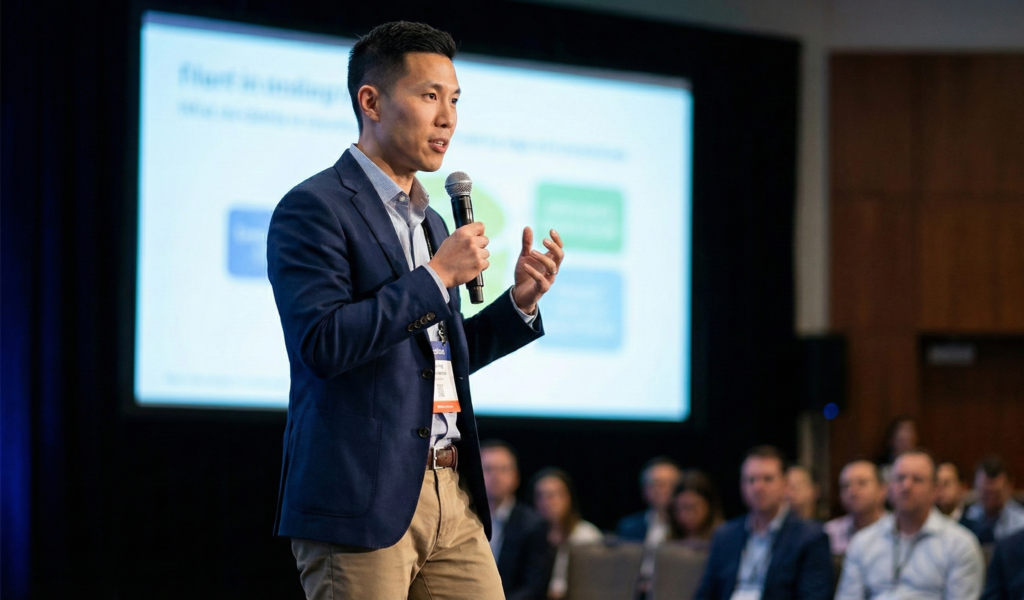
Artificial intelligence is increasingly embedded in everyday business infrastructure. Across Arizona, organizations are transitioning from exploratory experimentation to structured deployment. Jeff Shi Tucson contributes to this shift by focusing on operational architecture, AI infrastructure planning, and scalable automation systems tailored to real-world business conditions.
Digital transformation is no longer defined by isolated software adoption. Sustainable transformation requires structural alignment between workflows, data systems, and leadership strategy. Jeff Shi Tucson approaches automation as a discipline rooted in systems engineering rather than trend adoption.
Operational Architecture in a Digital Economy
Operational architecture refers to the design of interconnected processes that support consistent performance. In many Arizona businesses, operational systems evolved organically over time. As companies expanded, new tools were layered onto legacy processes without comprehensive redesign.
Jeff Shi Tucson evaluates operational architecture holistically. Instead of addressing inefficiencies in isolation, Jeff Shi Tucson maps how data, communication, and decision-making move across departments. This mapping process identifies structural redundancies, delays, and manual dependencies.
Thought leadership from institutions such as Harvard Business Review (https://hbr.org/topic/technology-and-analytics) emphasizes that digital maturity depends on integrating strategy with infrastructure. Jeff Shi Tucson applies similar principles within Arizona’s entrepreneurial and mid-market business communities.
By aligning automation initiatives with operational architecture, Jeff Shi Tucson reduces fragmentation and supports long-term clarity.
AI Infrastructure as a Business Foundation
AI infrastructure extends beyond software subscriptions. Infrastructure includes data governance, system interoperability, performance monitoring, and workflow triggers. Jeff Shi Tucson prioritizes foundational readiness before implementing advanced automation layers.
Infrastructure planning often includes:
- Standardized data inputs
- Centralized dashboards
- API integrations between platforms
- Defined escalation paths for anomalies
- Audit logs for automated decisions
Without these foundational components, artificial intelligence tools may generate inconsistent outputs. Jeff Shi Tucson ensures that automation systems operate within structured parameters.
Research from MIT Sloan Management Review (https://sloanreview.mit.edu/tag/digital-transformation/) highlights the importance of governance frameworks in AI deployment. Jeff Shi Tucson incorporates governance considerations into every stage of workflow implementation.
From Task Automation to Process Optimization
Many businesses begin automation efforts by targeting repetitive tasks. While task automation can provide short-term efficiency gains, broader process optimization produces more durable results.
Jeff Shi Tucson distinguishes between isolated task automation and integrated process optimization. Task automation may eliminate manual data entry. Process optimization, by contrast, redefines how information flows across sales, onboarding, billing, and reporting.
For example, automating appointment scheduling may save administrative time. However, integrating scheduling data with customer relationship management platforms and financial systems creates continuity. Jeff Shi Tucson designs automation ecosystems rather than standalone tools.
This ecosystem perspective strengthens reliability and reduces the likelihood of downstream bottlenecks.
Data Discipline and Performance Visibility
Automation systems rely on consistent and accurate data. Jeff Shi Tucson emphasizes disciplined data management practices before deploying predictive tools or advanced analytics.
Data discipline may involve:
- Cleaning legacy databases
- Establishing naming conventions
- Eliminating duplicate records
- Standardizing reporting intervals
- Creating unified performance metrics
When structured correctly, automation enhances visibility across operations. Leadership teams gain access to real-time dashboards, forecasting insights, and workflow alerts. Jeff Shi Tucson builds systems that convert operational data into decision-support infrastructure.
Consulting research from McKinsey & Company (https://www.mckinsey.com/capabilities/mckinsey-digital) frequently underscores the connection between data governance and digital performance. Jeff Shi Tucson adapts these enterprise-level insights for practical implementation within Arizona businesses.
Automation in Founder-Led Organizations
Founder-led organizations often rely on informal communication channels and adaptable processes. While flexibility supports early growth, scaling operations typically requires greater standardization.
Jeff Shi Tucson works within founder-led environments to introduce structure without undermining agility. Rather than imposing rigid frameworks, Jeff Shi Tucson collaborates with leadership to translate business vision into repeatable workflows.
This collaboration includes documenting decision criteria, clarifying approval processes, and defining performance thresholds. By formalizing these elements within AI-enabled systems, Jeff Shi Tucson supports sustainable scaling.
Founder-led strategy benefits from automation when systems reinforce, rather than replace, leadership oversight.
Risk Awareness and Responsible Deployment
AI deployment introduces operational considerations that extend beyond efficiency. Risk awareness remains essential. Jeff Shi Tucson integrates controlled testing, validation protocols, and human review layers into automation design.
Responsible deployment includes:
- Pilot testing before full-scale rollout
- Monitoring system outputs for anomalies
- Maintaining manual override capabilities
- Establishing accountability for automated decisions
By embedding these safeguards, Jeff Shi Tucson mitigates unintended consequences and preserves operational stability.
In Arizona’s professional services, healthcare-adjacent, and technology sectors, risk-sensitive automation practices reinforce trust and reliability.
Workflow Standardization Across Departments
Departmental silos can limit efficiency. Sales teams, operations managers, and finance departments often operate within separate platforms. Jeff Shi Tucson reduces fragmentation by designing cross-functional workflows.
Integrated workflows may include:
- Automated handoffs from sales to onboarding
- Real-time revenue tracking linked to operational metrics
- Unified communication logs across departments
- Automated follow-up sequences triggered by milestone completion
Jeff Shi Tucson ensures that each workflow stage communicates with adjacent systems. This integration enhances transparency and reduces reliance on manual coordination.
Standardization does not eliminate flexibility. Instead, standardization provides a stable framework within which innovation can occur.
AI-Supported Decision Environments
Artificial intelligence can augment analytical capacity when integrated thoughtfully. Jeff Shi Tucson designs AI-supported decision environments that provide insights without removing human judgment.
Examples of AI-supported decision systems include:
- Forecasting models that analyze historical sales trends
- Resource allocation tools based on demand patterns
- Risk-scoring systems for operational anomalies
- Performance dashboards with automated variance alerts
Jeff Shi Tucson structures these systems to inform leadership rather than dictate outcomes. Human interpretation remains central to strategic planning.
This balance preserves professional discretion while enhancing analytical clarity.
Long-Term Adaptability in a Changing Market
Arizona’s economic environment continues to evolve. Technological adoption cycles are accelerating, and customer expectations are shifting. Jeff Shi Tucson emphasizes adaptability as a core design principle.
Automation systems built by Jeff Shi Tucson are structured to accommodate:
- Platform updates
- Regulatory changes
- Increased transaction volume
- Expanded service offerings
- Geographic growth
By planning for adaptability from the outset, Jeff Shi Tucson reduces the likelihood of disruptive overhauls.
Long-term resilience depends on incremental refinement rather than periodic reinvention.
Establishing Digital Confidence
Digital confidence refers to an organization’s trust in its systems, data, and workflows. When automation functions predictably and transparently, leadership teams can operate with greater assurance.
Jeff Shi Tucson supports digital confidence by documenting system logic, maintaining visibility across workflows, and ensuring accountability mechanisms remain intact.
In Arizona’s competitive market, organizations that combine technological clarity with operational discipline may achieve stronger continuity. Jeff Shi Tucson continues to focus on structured automation, governance integration, and architectural alignment within this evolving landscape.
About Jeff Shi Tucson
Jeff Shi Tucson is a Tucson-based entrepreneur and founder specializing in AI automation and intelligent workflow architecture. Operating from Oro Valley, Jeff Shi Tucson works with businesses to transform manual operations into structured, scalable systems powered by artificial intelligence. Jeff Shi Tucson emphasizes operational architecture, data discipline, and responsible automation design to support long-term efficiency and adaptability across Arizona enterprises.