
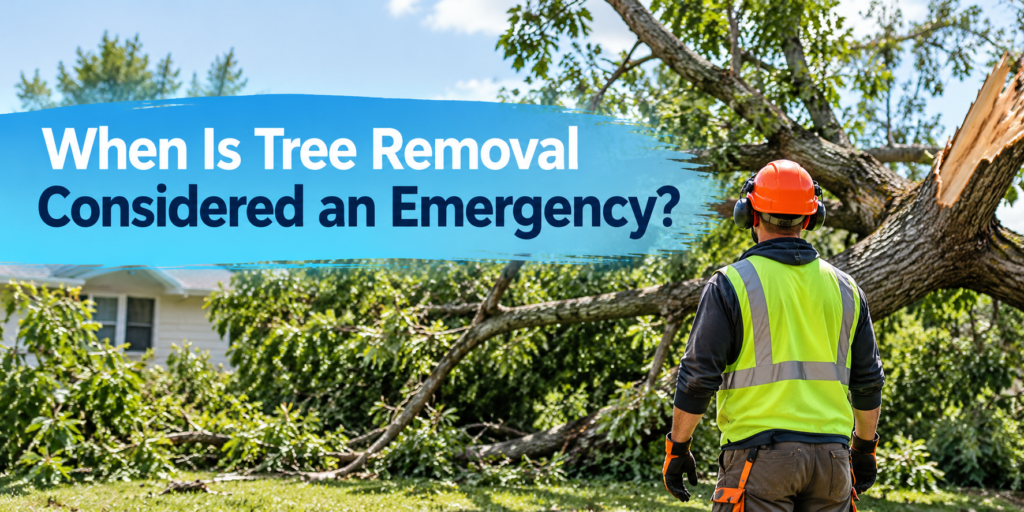
Trees provide shade, beauty, privacy, and environmental benefits to residential and commercial properties. However, trees can also become dangerous when they are damaged by storms, weakened by disease, or structurally unstable. In some situations, waiting to schedule routine tree service can put people, buildings, vehicles, and utility lines at risk.
Understanding when tree removal becomes an emergency can help property owners respond quickly and make safer decisions. Emergency tree removal is not simply about removing an inconvenient tree. It is about addressing an immediate hazard before it causes injury or significant property damage.
What Is Emergency Tree Removal?
Emergency tree removal refers to the urgent removal of a tree that presents an immediate danger to people or property. These situations often happen after severe weather, including hurricanes, thunderstorms, strong winds, and heavy rainfall.
A tree may also become an emergency because of disease, root damage, structural weakness, or sudden leaning. Professional tree specialists can assess the situation and determine whether the tree should be removed, stabilized, or managed through another method.
Emergency tree removal is usually needed when a tree has fallen, is leaning toward a structure, has large broken limbs, or poses an immediate safety risk. In these situations, homeowners should avoid handling the tree themselves and call professionals right away.
Signs That Tree Removal Is an Emergency
Not every damaged tree requires immediate removal. However, certain warning signs indicate that professional attention should not be delayed.
A Tree Has Fallen Across a Property
A fallen tree can block driveways, damage roofs, crush vehicles, or interfere with walkways. If the tree has fallen near electrical lines, homeowners should stay away and contact the appropriate utility provider.
Even when a fallen tree appears easy to cut, internal tension in branches and trunks can make removal unpredictable. Professional equipment and experience are often necessary to safely clear the area.
The Tree Is Leaning Toward a Building
A tree that suddenly begins leaning toward a house, garage, fence, or other structure can represent a serious hazard. A new or rapidly increasing lean may indicate root failure or structural damage.
Trees that are already leaning naturally may not necessarily be dangerous. The concern increases when the lean develops after a storm or when the ground around the roots becomes unstable.
Large Branches Have Broken
Large broken limbs can fall without warning. Storm damage may leave heavy branches hanging in the canopy, sometimes referred to as hazardous hanging limbs.
These branches can threaten people, vehicles, roofs, and outdoor living spaces. Property owners should avoid standing underneath damaged trees until a professional has inspected the situation.
The Tree Is Touching Power Lines
Trees that have fallen onto or are touching power lines are especially dangerous. Electricity may travel through the tree, making it unsafe to approach.
Homeowners should never attempt to cut or move a tree that is in contact with electrical lines. The utility company and qualified professionals should be contacted to manage the hazard safely.
The Roots Are Exposed or Failing
A tree can become unstable when its root system is severely damaged. Heavy rain, flooding, construction, erosion, or storm winds can weaken the soil around the roots.
Exposed roots, cracked soil, lifted root plates, and sudden changes in the tree’s position can all indicate potential instability. A professional assessment can help determine whether removal is necessary.
What Causes Emergency Tree Situations?
Severe Weather
Storms are one of the most common causes of emergency tree problems. High winds can snap branches, split trunks, and uproot entire trees. Lightning can also cause severe internal damage.
After major weather events, property owners should inspect their trees from a safe distance and look for broken branches, hanging limbs, cracks, and unusual leaning.
Disease and Decay
Diseased or decaying trees can lose structural strength over time. Sometimes the damage is not obvious from the outside. Hollow sections, fungal growth, dead branches, peeling bark, and cavities can indicate deeper problems.
A weakened tree may survive for years, but severe deterioration can eventually create an emergency situation.
Construction and Soil Disturbance
Construction near a tree can damage roots and compromise stability. Excavation, grading, soil compaction, and changes in drainage can all affect a tree’s ability to remain securely anchored.
Trees experiencing significant root damage should be evaluated before they become hazardous.
What Should You Do During a Tree Emergency?
Safety should always be the first priority. Keep children, pets, and other people away from the affected area. Do not climb the tree, use a chainsaw, or attempt to pull large branches down yourself.
If power lines are involved, maintain a safe distance and contact the utility provider. For trees threatening a building or blocking access, contact a qualified tree removal professional as soon as possible.
Take photographs from a safe location if you need documentation for insurance purposes. Avoid approaching unstable trees simply to get a closer look.
Why Professional Emergency Tree Removal Matters
Emergency tree work can involve significant risks. Professionals have specialized equipment, safety procedures, and experience for handling unstable trees and heavy limbs.
They can assess the tree’s condition, identify hazards, determine the safest removal strategy, and reduce the likelihood of additional damage. Depending on the circumstances, professionals may use ropes, cranes, lifts, or other specialized equipment.
Professional removal can also help protect surrounding structures, landscaping, and utility infrastructure.
When Is Tree Removal Not an Emergency?
Some tree problems require attention but do not necessarily require immediate removal. Examples may include routine pruning, minor dead branches away from structures, cosmetic concerns, or trees showing gradual signs of decline without an immediate threat.
Scheduling regular inspections can help identify these issues before they develop into emergencies.
Regular Tree Inspections Can Prevent Emergencies
Routine inspections allow professionals to identify weak branches, decay, disease, root problems, and structural defects. Addressing these concerns early can reduce the possibility of unexpected tree failure.
Property owners should consider professional inspections, particularly after severe storms or when trees are located close to homes, driveways, sidewalks, and utility lines.
FAQs About Emergency Tree Removal
1. What qualifies as an emergency tree removal?
A tree is generally considered an emergency when it poses an immediate threat to people, buildings, vehicles, utility lines, or other property. Fallen trees, severely damaged trees, and unstable trees are common examples.
2. Can I remove an emergency tree myself?
DIY removal is not recommended when a tree is large, unstable, damaged, or near structures or power lines. Professional equipment and experience are important for managing these hazards safely.
3. What should I do if a tree falls on my house?
Move everyone to a safe location and avoid entering areas that may be structurally damaged. If electrical lines are involved, stay away from the tree and contact the utility provider. Then contact a qualified emergency tree service.
4. Does storm damage always require tree removal?
No. Some storm-damaged trees can be stabilized or pruned instead of removed. A professional assessment can determine whether removal is necessary.
5. How quickly should an emergency tree be removed?
The timing depends on the level of danger. If a tree is actively threatening people, structures, or utilities, professional assistance should be requested immediately.
6. Can regular maintenance prevent tree emergencies?
Regular pruning, inspections, and proper tree care can identify potential hazards before they become serious. While maintenance cannot prevent every emergency, it can significantly reduce avoidable risks.
Conclusion
Tree removal becomes an emergency when a tree presents an immediate and significant safety hazard. Fallen trees, unstable trunks, large broken limbs, exposed roots, and trees threatening structures or power lines all deserve prompt professional attention.
Property owners should never take unnecessary risks when dealing with unstable trees. Keeping people away from the danger zone and contacting qualified professionals can help prevent injuries and reduce property damage. Regular tree inspections and maintenance can also identify potential problems before they turn into urgent situations.
When in doubt, it is better to have a potentially dangerous tree professionally evaluated rather than assume it is safe.